
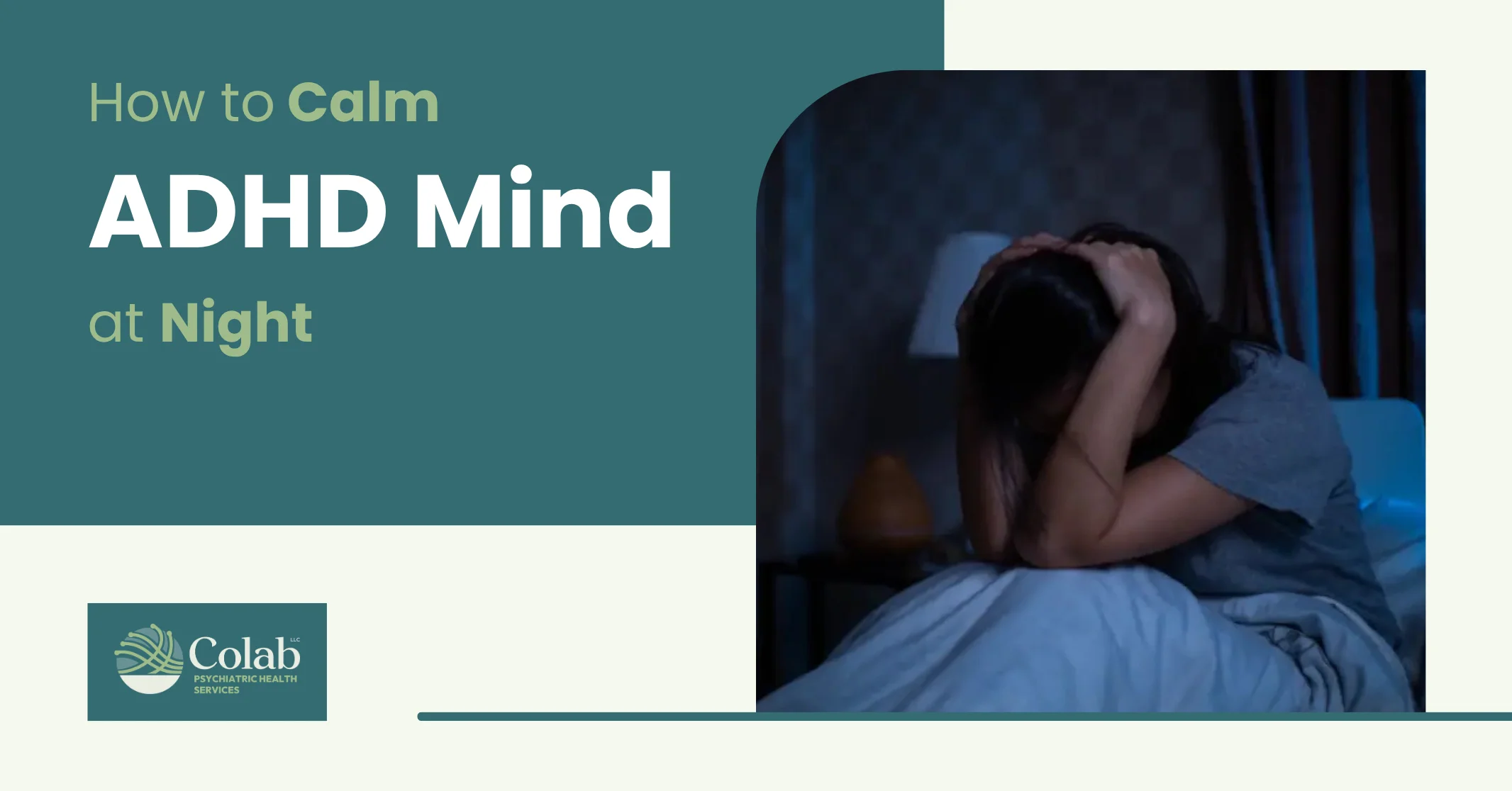
Midnight, and the day is technically over except that it isn’t, not for the brain. Something said at lunch is being replayed for the fourth time.
A half-finished thought about a work project shows up uninvited. The body is tired. The mind has other plans entirely. For a lot of people with ADHD, this isn’t an occasional bad night, it’s just what nighttime tends to be.
Why Nights Are Different With ADHD
During the day, tasks and stimulation give an ADHD brain something to hold onto. Remove all of that at night and the brain often fills the gap on its own, cycling through old conversations, half-built plans, random worry. There’s a real circadian piece too, people with ADHD tend to produce melatonin later than average, so the sleepy signal that arrives around 10pm for most people simply shows up later, or not at all on some nights.
Stimulant medication wearing off in the evening adds another layer for a lot of patients, sometimes producing a rebound restlessness right when winding down matters most.
Quiet Isn’t Always the Answer
Most standard sleep advice assumes the goal is silence and stillness. For ADHD specifically, that can backfire, an understimulated brain left completely alone tends to generate its own noise. What tends to work better, when it comes to calming activities for ADHD, is something low-key and absorbing enough to occupy the mind without ramping it up.
- A podcast or audiobook at low volume on something familiar, not new or gripping
- Repetitive, low-effort tasks like folding laundry or a simple craft
- A paper puzzle with a clear stopping point, crosswords work well here
- Writing tomorrow’s to-do list down, just to get it out of rotation
The goal with all of this is ADHD calm, not a blank mind, just enough for the brain to hold onto so it stops generating its own chaos.
Anchoring the Body Helps More Than Pure Breathing Exercises
Standard breathing techniques sometimes fall flat for ADHD because there isn’t enough to hold onto. Adding a physical anchor tends to help, which is really the difference between generic relaxation techniques for ADHD and ones actually built for how this brain works. Tracing a shape while counting a breath. Progressive muscle relaxation, moving through each muscle group in order. A weighted blanket, which gives the nervous system steady sensory input a lot of people with ADHD find genuinely settling. These calming techniques for ADHDtend to feel awkward at first and improve with repetition.
Routine Matters More Here Than It Does for Most People
ADHD relies on external structure more than most conditions do, and bedtime is no exception. A consistent wind-down routine gives the brain a cue that sleep is actually approaching, which matters even more given the delayed melatonin timing. A fixed start time. Dimming lights an hour out. A phone left in another room, not because screens are inherently bad, but because the notification pull is specifically hard to resist for an ADHD nervous system.
What Happens Earlier in the Day Still Matters
Nighttime doesn’t exist in isolation. Some of the most effective ADHD calming strategies happen well before bed.
Afternoon movement lowers baseline stress hormones and tends to improve how quickly sleep actually comes, and for people whose ADHD leans more physically restless, calming techniques for hyperactivity specifically, a slow walk, deliberate stretching, tend to matter even more than they do for the inattentive type.
Cutting caffeine after early afternoon matters more here than for most people, since stimulants clear the ADHD system more slowly than people often assume.
Short mental breaks scattered through the day, five minutes here and there, keep the evening from arriving already overloaded.
ADHD relaxation techniques work better stacked across the whole day than crammed into the hour before bed.
When the Brain Spirals at Night
Even with a solid routine, some nights just go sideways, and how to calm down ADHDin that moment looks different from a planned wind-down. Cold water on the wrists can interrupt a racing loop fairly quickly.
Getting up, writing down whatever’s cycling, and physically setting the paper aside gives the brain something concrete to release. And sometimes easing the pressure around sleep itself, accepting that tonight might just take longer, shortens the time it actually takes.
Real ADHD relief at night often comes down to working with the brain’s pace instead of fighting it.
If the Pattern Doesn’t Break on Its Own
Lifestyle changes genuinely help a lot of people. For others, the underlying circadian shift, medication timing, or co-occurring anxiety needs real clinical attention alongside the habit-level work. A conversation about adjusting medication timing, or addressing sleep as its own treatment target rather than a side effect to manage, sometimes makes more difference than another wind-down technique ever could.
Is ADHD Considered a Special Need?
Is ADHD considered a special need? In most U.S. legal and educational frameworks, yes. ADHD qualifies as a disability under the ADA and IDEA, which is part of why consistent, well-managed care, including attention to sleep, matters as much as it does for daily functioning.
If ADHD is making nights consistently hard, that’s worth bringing to a provider directly.
Colab Psychiatric Health Services provides thorough ADHD evaluation and treatment, including attention to how it affects sleep, not just focus during the day. Patrick Okeke, PMHNP-BC, builds treatment plans around a patient’s actual daily and nightly patterns rather than a generic checklist.
Book an appointment at colabpsychiatric.com.

No comment